

Volvo’s XC60 recently became the best-selling model in the Swedish brand’s history. The popular SUV overtook the legendary 240 in the sales rankings. The 240 set its record in 1993, when the last unit rolled off the production line. During 19 years of production, Volvo built 2,685,171 examples of the 240, including the estate version, which did more than any other model to shape the brand’s image: boxy cars with spacious luggage compartments.
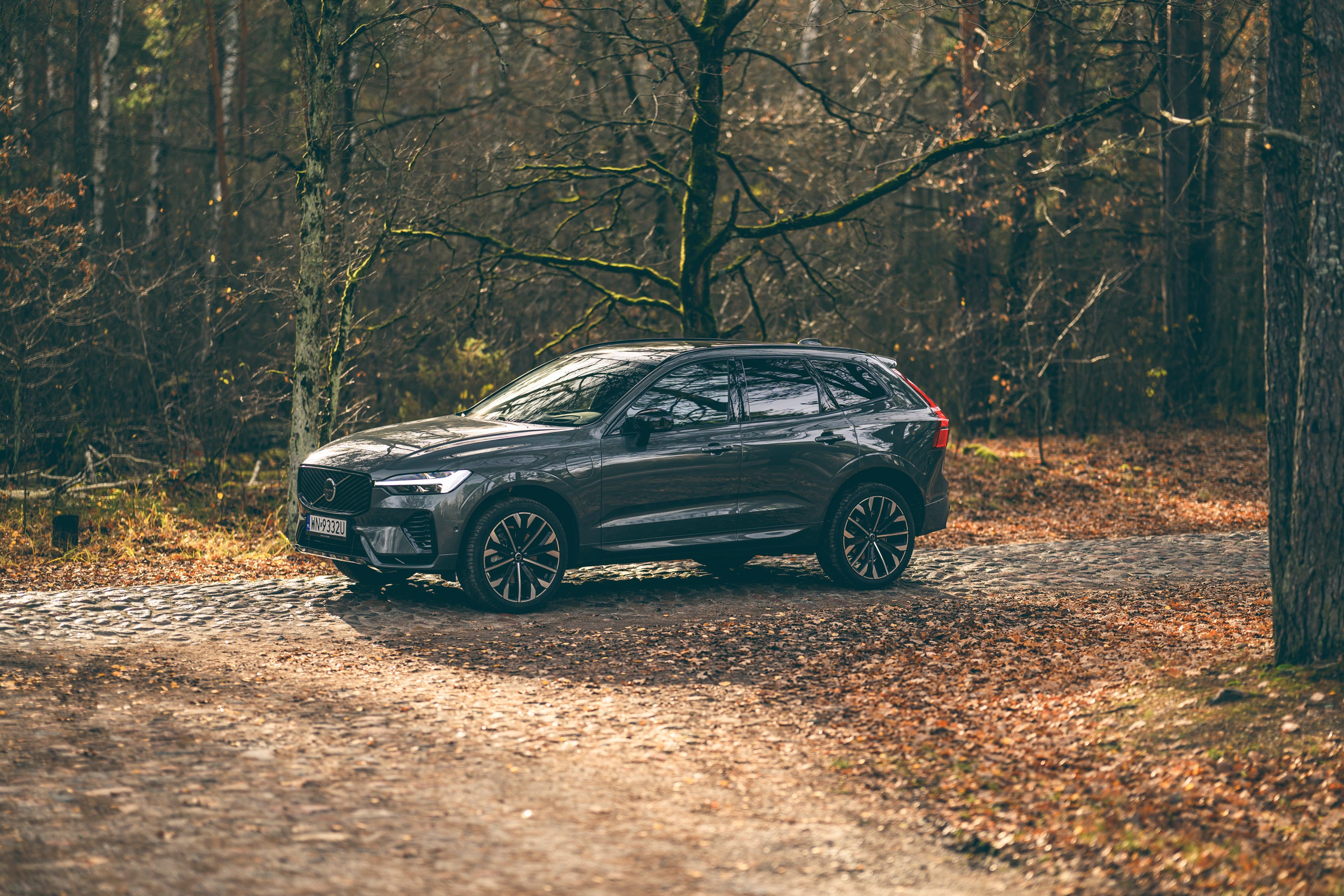
It took the XC60 17 years to break that record. Both generations contributed to its success, and the story is not over yet: a thoroughly refreshed XC60 will soon arrive in showrooms, so the sales tally should keep climbing for several more years.
Functional Elegance from Sweden
The first-generation XC60 was premiered at the Detroit Motor Show in January 2007. The venue was no coincidence: Ford Motor Company, Volvo’s owner at the time, was headquartered nearby. The XC60 was also intended to be the brand’s next model, after the XC90, to tap into the market trend of buyers switching from traditional estates to raised SUVs. Compared with the XC90, the XC60 was meant to be easier to manoeuvre in heavy traffic and better suited to life in big cities.
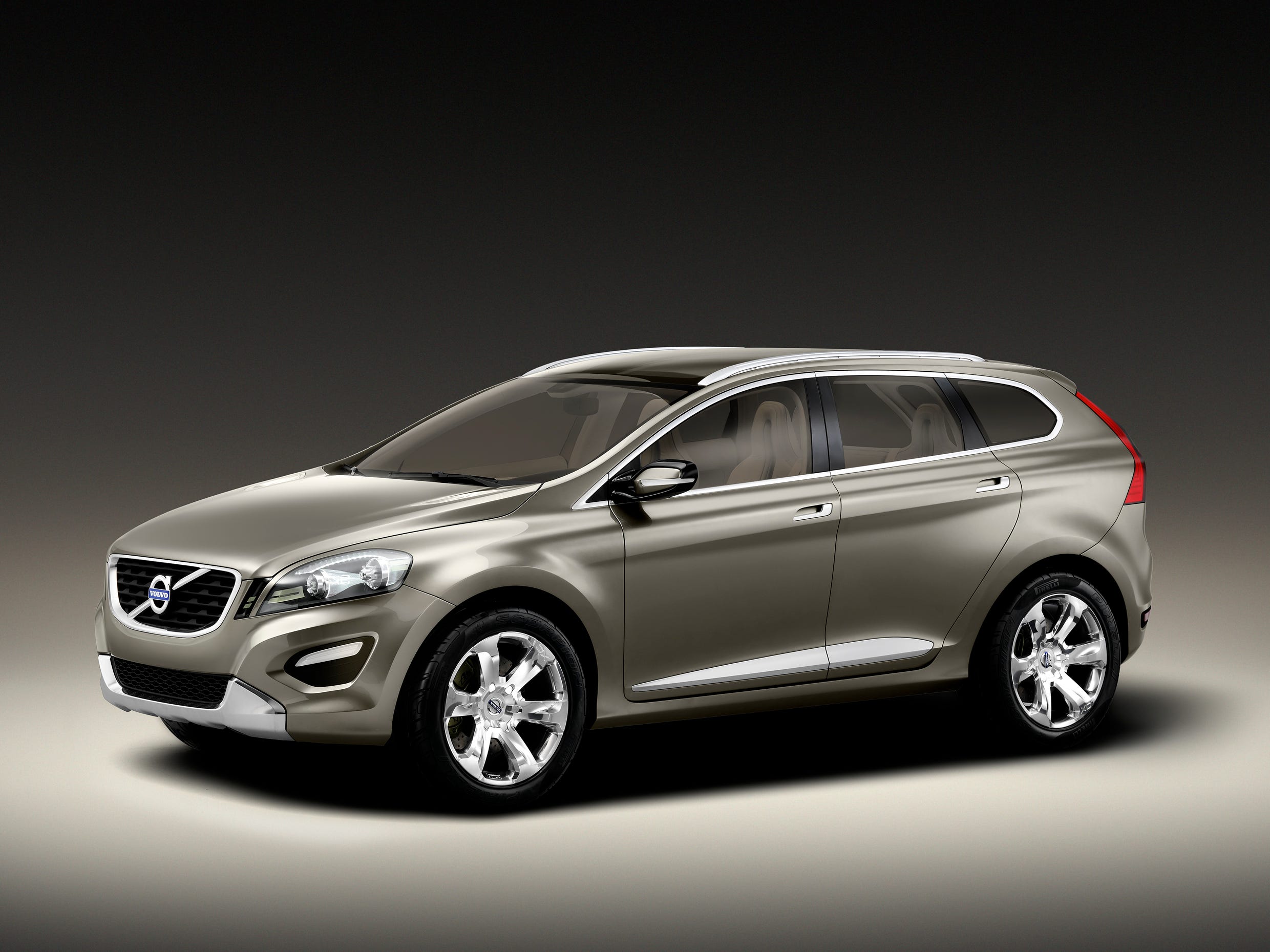
The prototype, developed by a design team led by Steve Mattin, had a silhouette with a sharply sloping rear window, in keeping with another emerging trend: the coupé-like SUVs. Volvo wanted to create a prestigious, timeless model that perfectly embodied the Scandinavian idea of “functional elegance”. The result was something few would have expected from the maker of Sweden’s “bricks on wheels”.
“Below the waistline, the characteristic, solid XC elements give the vehicle a muscular look and a purposeful stance, emphasised by high ground clearance and large wheels. Above the waistline, dynamic lines trace the profile and sporty character of an elegant, sexy coupé,” Mattin said in 2007.
The concept had a few unusual features, including a strangely opening tailgate. Its split design turned on its head an idea BMW had used for years: the ability to open the rear window separately to load smaller items. In the XC60 concept, the lower section of the tailgate was supposed to serve this purpose. It slid backwards in a rather peculiar way, then lifted upwards. The idea was supposedly meant to help in two situations: in low garages (which would have had to be very low indeed) and when loading heavy items. My back hurts just looking at it.
Fortunately, the production XC60 had a more conventional tailgate, which worked perfectly well – there is no need to reinvent the wheel. Better still, the car that reached showrooms looked remarkably similar to the handsome prototype and set the direction for Volvo styling for years to come. A year later, the S60 saloon was unveiled with a very similar design character. The XC60 was attractive enough to become the brand’s best-selling model after just one year. It went on to set several records that Volvo could proudly report to its executives. In 2012, XC60 sales became the first in the model’s history – and in the history of any Volvo – to exceed 100,000 units in a year. In 2015, the facelifted XC60 took the top spot in Europe’s D-SUV segment. In 2017, the first generation ended its run with 1,070,984 units produced.
Thor’s Hammers and Inspiration from Nature
On 1 July 2012, Thomas Ingenlath took the reins of Volvo design. His main task was to develop a new character for the cars bearing the Mars symbol on their grille. The first concept was unveiled at the Frankfurt Motor Show in 2013. The striking Concept Coupé was the first to feature daytime running lights shaped like the mythical Thor’s Hammer. Its rear end, meanwhile, incorporated lights whose evolution can now be seen in practically every model in the range. The concept also paid spiritual homage to the P1800, a beautiful coupé from the 1960s.
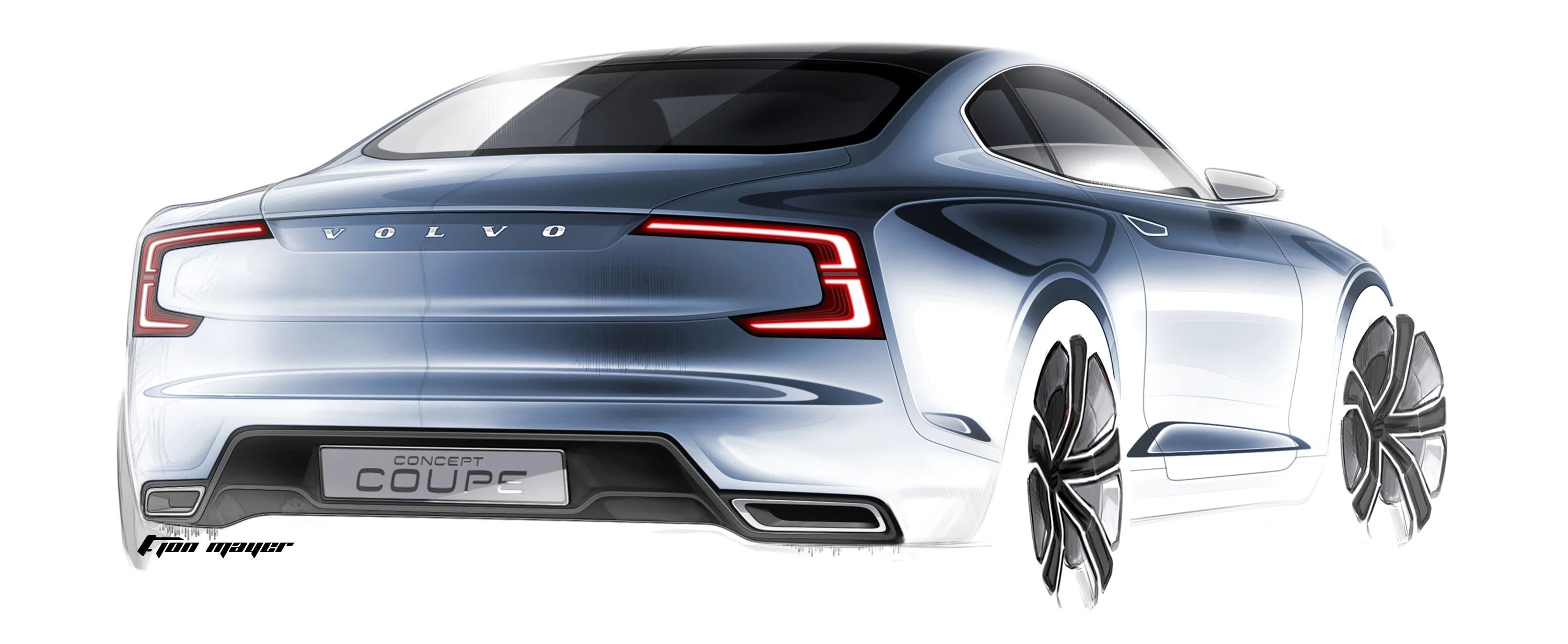
Fortunately, the design did not end up in a display case full of unrealised dreams. Instead, it became the basis for the first model—bearing the number 1 as its model designation – from Polestar, the new brand spun off from Volvo.
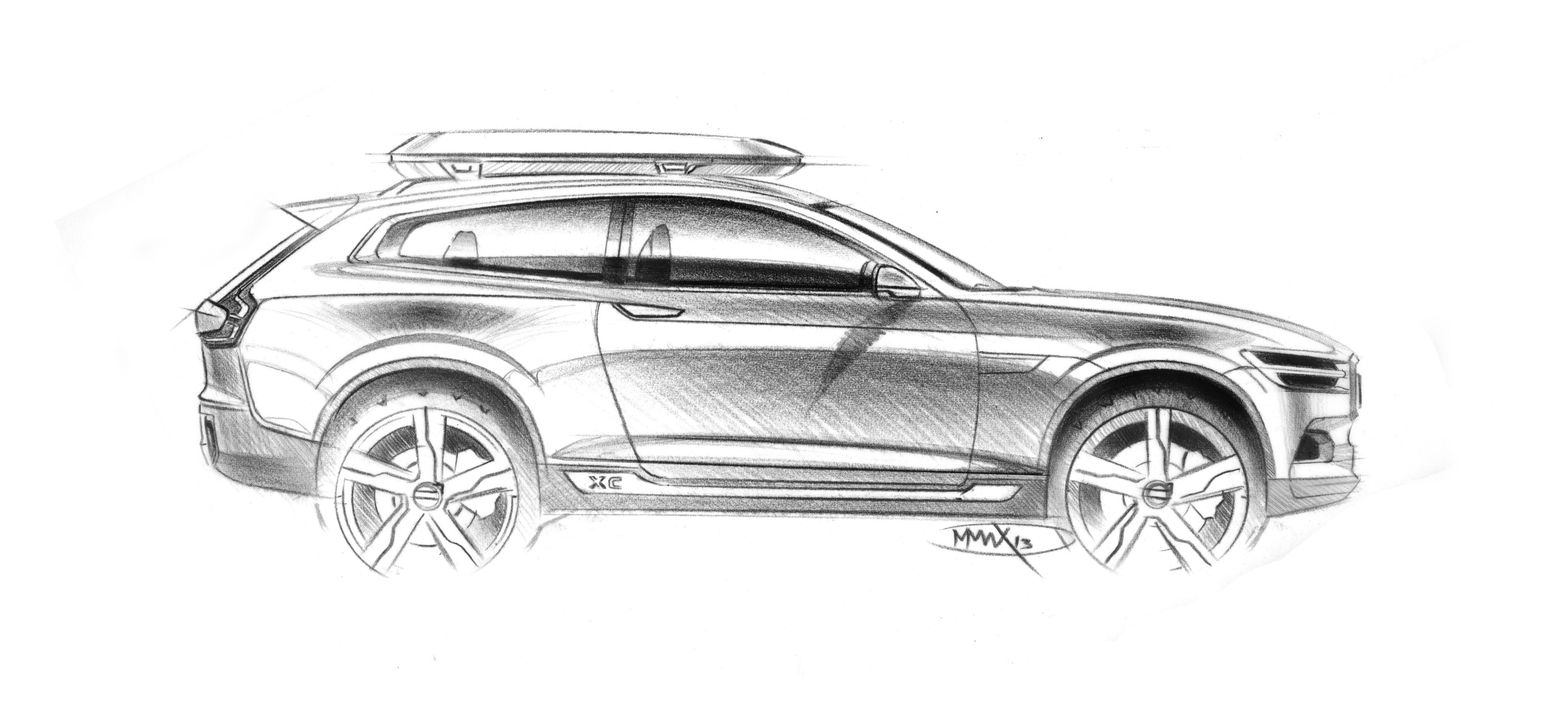
The most interesting project from the early years of Ingenlath’s career as head of design was called the Volvo Concept XC Coupé. Unveiled at the 2014 Detroit Motor Show, the crossover foreshadowed what would become the brand’s most important model. The second-generation XC90 was the first production model to adopt the new design language. Unveiled in mid-2014, it still looks stunning today, 12 years later. But with its compact dimensions, the Concept XC Coupé was really pointing towards something smaller.
That “something” was the second-generation Volvo XC60, which premiered at the Geneva Motor Show on 7 March 2014, almost exactly 90 years after the brand was founded. The first teaser appeared online at the end of February and looked like this:
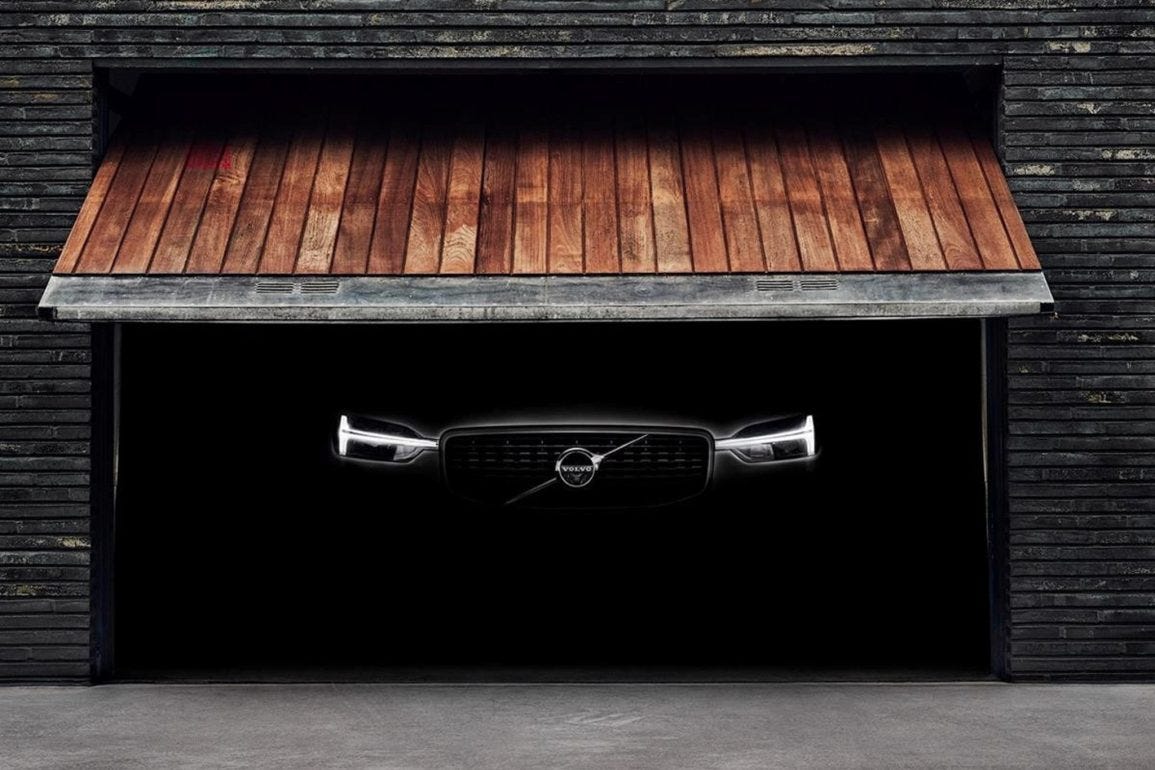
The second-generation Volvo XC60 was the fourth car, after the XC90, S90 and V90, to be based on Volvo’s own SPA (Scalable Product Architecture) platform – a modular structure that could be adapted for cars of different sizes and with different powertrains. Its body followed Volvo’s contemporary design trends while also building on the best qualities of the first generation: it looked visually lighter and sportier than the flagship XC90.
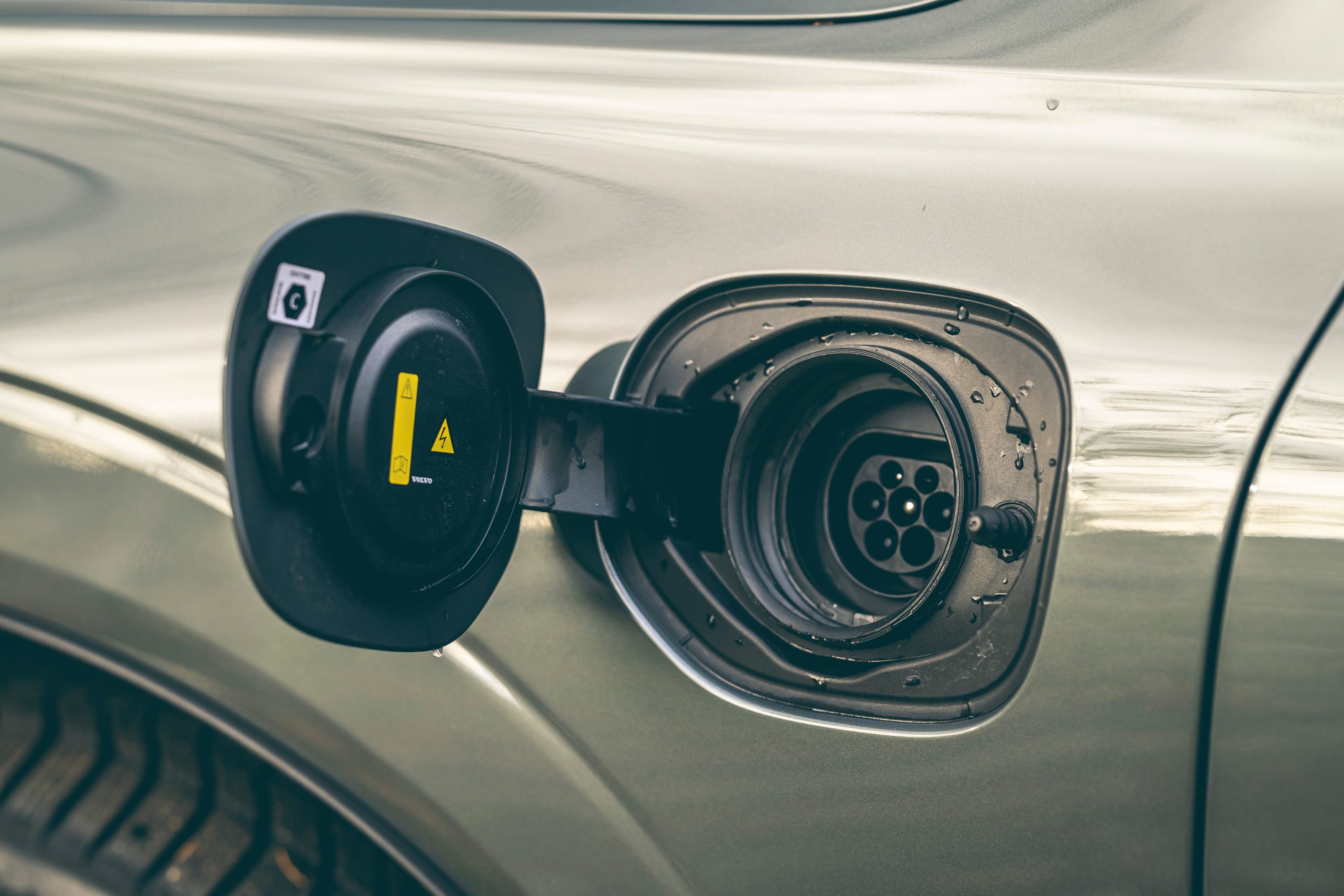
The engine range covered everything from diesels to petrol-electric plug-in hybrids. Every engine had four cylinders and a displacement of just two litres. One of them was the T6, initially a petrol engine with both a turbocharger and a supercharger. In a later version, the T6 gained an electric motor on the rear axle and a plug for charging.
The Volvo XC60 T6 prepared for model year 2026 is one of two plug-in hybrids in the range. The more powerful T8, with a system output of 455 hp, sits at the top of the engine line-up. The T6 is less powerful, with “only” 350 hp and 659 Nm of torque, and takes “as long as” 5.7 seconds to reach 100 km/h. The combustion engine itself produces 253 hp and drives only the front wheels. There is no physical connection between the axles in this version because the rear wheels are driven by an independent electric motor producing 145 hp. The electric motor on the rear axle draws power from an 18.8 kWh battery positioned where the driveshaft used to run. This arrangement saves space in the luggage compartment, whose capacity is almost identical to that of the conventional combustion-engine version.
A Rear-Wheel-Drive Volvo in 2026?
This layout means that, when running solely on electric power, the XC60 becomes a rear-wheel-drive car. After travelling up to 80 km (WLTP), the combustion engine joins in and the car regains full all-wheel drive. When you join a motorway and accelerate beyond 140 km/h, the electric motor shuts down completely. I have to admit that this is a rather unusual approach to the design, though I understand that in 99% of road situations, there is no need to drive all four wheels at once.
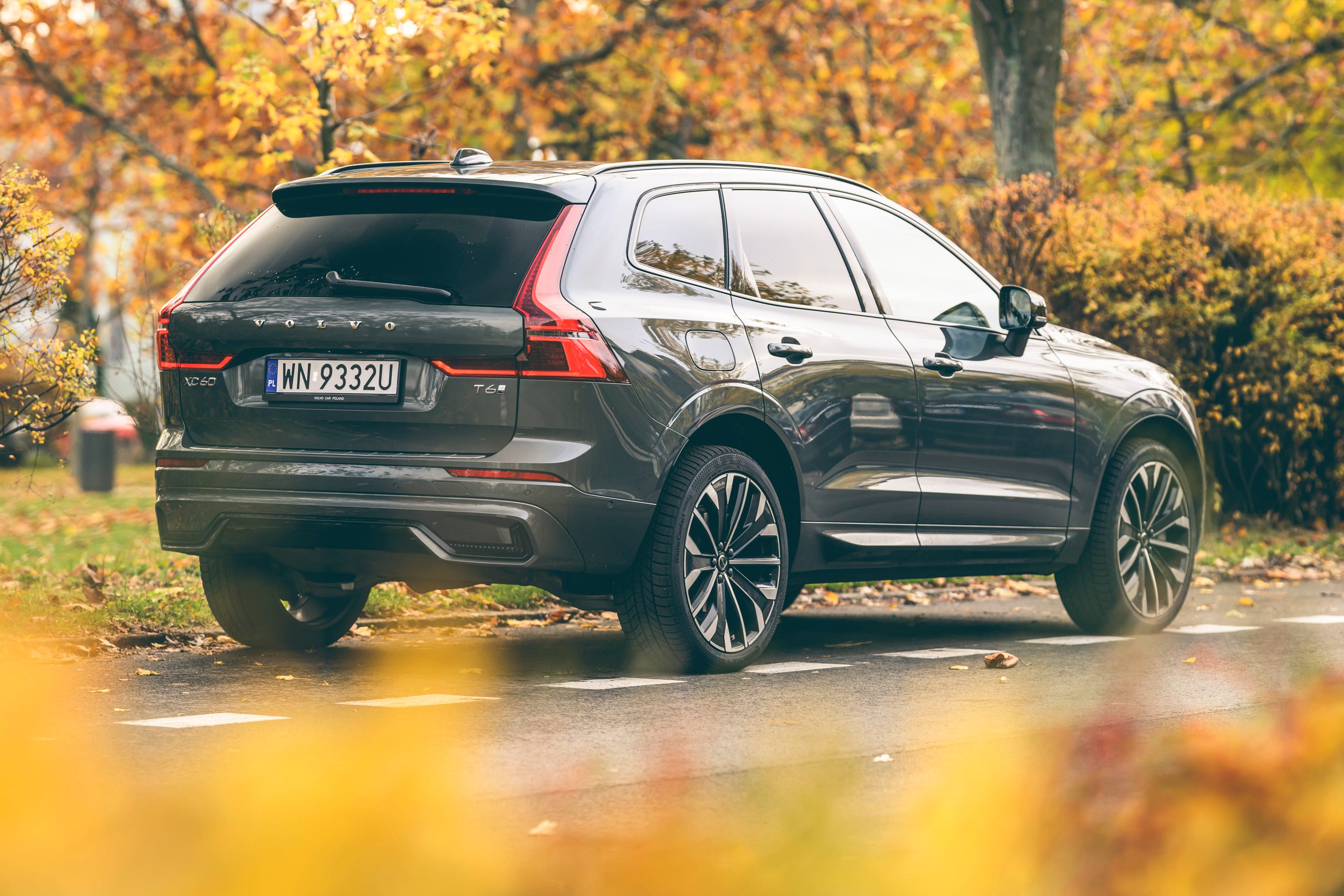
The combined effect of the two motors is surprisingly good. With the electric motor at the rear, everyday acceleration feels linear, while in parallel operation the combustion engine and eight-speed automatic gearbox work very discreetly. You can, of course, recover electrical energy with the brake pedal. Switching the car from D to B brings it close to one-pedal driving, although you still need to use the brake pedal to bring it to a complete stop.


The air suspension is clearly tuned more for comfort than sporty handling, and the car tends to lean in corners. The engine behaves differently, especially in Power mode, where the car feels lively and responds eagerly to acceleration. You do not feel the extra weight of the car, either: the electrical system adds around 250 kg. Its presence does show up at the fuel station on long motorway journeys, however. Consumption of 8–9 litres per 100 km is a given. The XC60 really makes sense in the city, where petrol consumption can drop below 4 litres. There is one condition: you need to drive mostly on electric power, switching to hybrid mode from time to time. AC charging is not particularly fast, at just 6.4 kW; a full charge takes around three and a half to four hours.
Comfort Comes First
For Volvo, performance matters less than the sense of comfort and calm the car provides in everyday use. The XC60 has one of the most pleasant interiors I have sat in. It has no gimmicks, is not futuristic, and is not crammed with screens. It feels cosy in a Scandinavian way – not minimalist for the sake of it. There is Nappa leather on the heated and ventilated front seats, wood on the dashboard and excellent ergonomics. The seats are exceptionally comfortable, while the rear bench is well shaped and has built-in, raiseable booster cushions for older children.


Sound comes from Bowers & Wilkins speakers, while the multimedia system is controlled through a new central display. It has replaced the older, smaller screen, but unfortunately the dashboard in that area was not redesigned, so the new display looks rather awkwardly fitted. Fortunately, the Android Automotive OS interface is exceptional and functional enough that you do not need to connect your phone to use, for example, Apple CarPlay—which does not work wirelessly anyway.


For model year 2027, Volvo has prepared another update for the XC60, as well as the XC40. This time, the exterior has changed more noticeably, while the engine range still includes three hybrid versions: one mild hybrid, the B5, and two plug-in hybrids, the T6 and T8. Both PHEVs have a larger battery, with a capacity of 41.2 kWh, and are expected to cover a longer distance—up to 180 km according to WLTP. This move by Volvo means the XC60 still has a long career ahead of it. And that is a good thing because it is an excellent car that makes you feel at home.